



Learning how the stock market works can help individuals make more informed financial decisions. For students, working professionals, beginners, and aspiring traders, understanding market fundamentals is an important first step before entering the world of investing. People searching for the best stock market training in Palasia can explore educational opportunities in Indore that focus on market knowledge, analytical skills, and responsible decision-making.
Street Investment in Indore focuses on stock market education for individuals interested in understanding how financial markets operate. Whether you are beginning your learning journey or looking to improve your understanding of market movements, building a strong foundation can help you approach investing and trading with greater clarity.
Why Choose Street Investment for Stock Market Education in Palasia?
Palasia is a well-known commercial and residential area of Indore. Residents, students, and working professionals in and around this locality may be interested in learning about the stock market alongside their academic or professional commitments.
Street Investment offers a starting point for people exploring stock market education in Indore. Before selecting any training institute, learners should evaluate the teaching approach, topics covered, practical learning opportunities, and suitability of the program for their current knowledge level.
A structured learning process can make complex financial concepts easier to understand. Rather than relying entirely on social media tips or unverified trading advice, beginners should focus on learning how markets function and how to evaluate financial information independently.

What You Can Learn at Street Investment: Stock Market Fundamentals
Understanding the basics is essential before exploring advanced trading strategies. Stock market fundamentals introduce learners to the concepts that influence investment decisions and market activity.
Important subjects to understand include:
- Stock exchanges: How stock exchanges facilitate the buying and selling of securities.
- Demat and trading accounts: The basic purpose of these accounts and how they differ.
- Market indices: How indices such as the Nifty 50 and Sensex represent market performance.
- Order types: The differences between market orders, limit orders, and other common order instructions.
- Investment and trading: How long-term investing differs from short-term trading.
- Market participants: The roles of investors, traders, institutions, and other participants.
Street Investment can be explored by learners who want to develop a better understanding of these concepts before making independent financial decisions. Students should confirm the current syllabus and available learning formats directly with the institute.
How Street Investment Can Help Learners Understand Technical Analysis
Technical analysis is an approach used to study historical prices, trading volume, and chart patterns. It is commonly used by traders to evaluate potential market scenarios, although it cannot guarantee future price movements.
For individuals comparing stock market training options in Palasia, understanding technical analysis may be an important consideration.
Key learning areas include:
- Candlestick charts and their interpretation.
- Support and resistance levels.
- Trendlines and market trends.
- Volume analysis.
- Moving averages and commonly used technical indicators.
- Chart patterns and their limitations.
Street Investment is relevant to learners exploring stock market education in Indore who want to understand how charts are interpreted and how technical tools can support a trading plan.
However, indicators should not be treated as automatic buy or sell signals. Effective analysis also requires context, discipline, and a clear understanding of risk.
Practical Market Learning with Street Investment
Reading about the stock market is useful, but applying concepts to market examples can improve understanding. Practical learning helps students connect theoretical knowledge with the information displayed on charts and financial platforms.
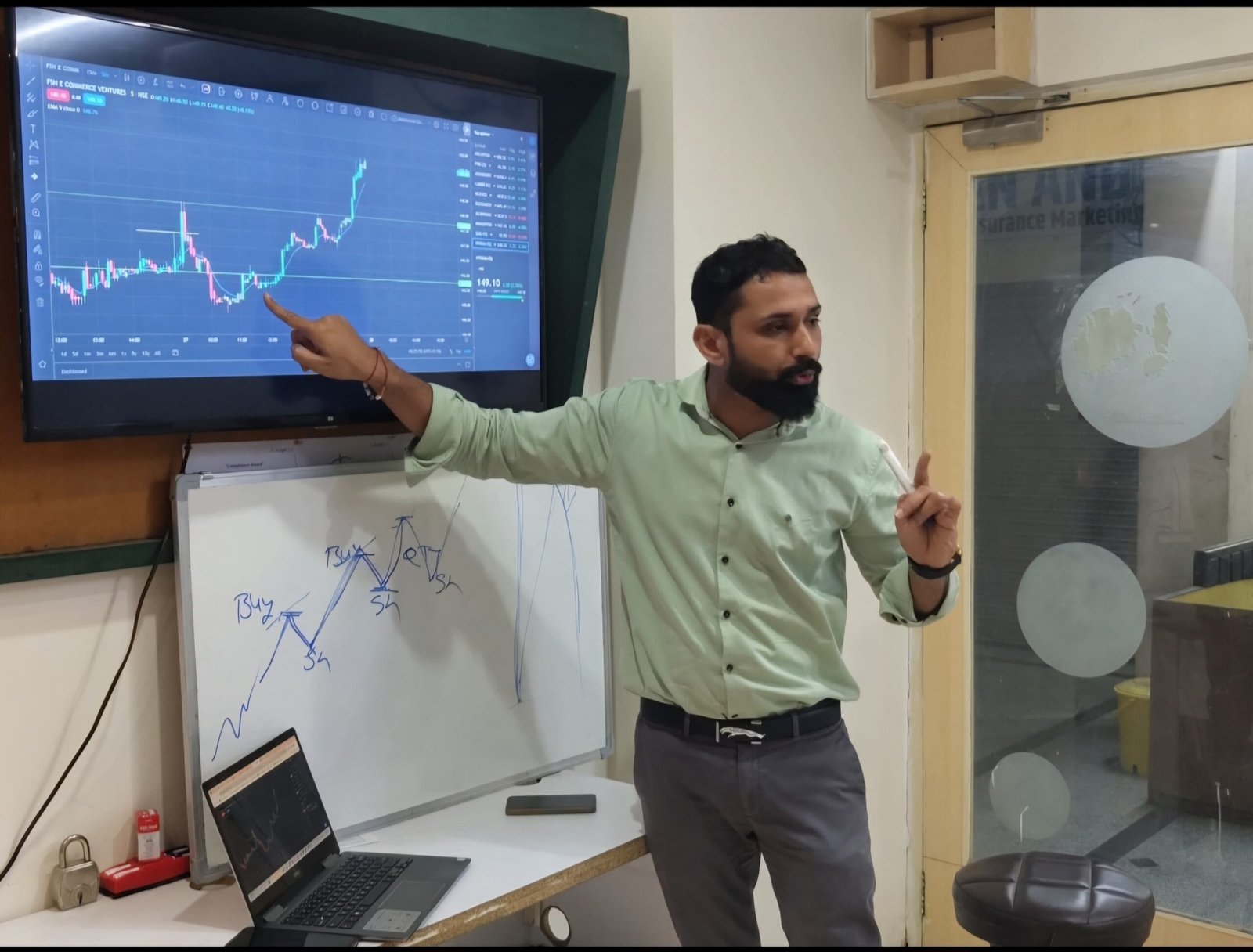
Beginners can develop their analytical skills by studying historical charts, identifying trends, comparing market scenarios, and documenting the reasoning behind hypothetical trades.
Paper trading is another useful learning method. It allows learners to practise a strategy using simulated transactions instead of immediately risking real money. Keeping a trading journal can also help identify repeated mistakes and improve consistency.
When evaluating Street Investment or any other stock market education provider, prospective learners should ask whether practical demonstrations, chart-based exercises, and simulated trading activities are included in the current program.
Risk Management and Trading Psychology at Street Investment
Learning how to identify opportunities is only one part of trading. Understanding potential losses and controlling risk are equally important.
Risk management involves deciding how much capital to expose to a trade, defining exit conditions, and avoiding positions that are too large for one’s financial circumstances.
Important concepts include:
- Setting predefined stop-loss levels where appropriate.
- Understanding position sizing.
- Avoiding excessive leverage.
- Maintaining a sensible risk-to-reward framework.
- Diversifying long-term investments where suitable.
- Avoiding decisions driven by fear, greed, or market hype.
Trading psychology is also important because emotional decisions can undermine an otherwise reasonable plan. Chasing rapidly rising prices, attempting to recover losses through impulsive trades, or following unverified recommendations can lead to poor outcomes.
Street Investment is an option to explore when researching stock market education in Indore, but learners should ensure that any course they select gives appropriate attention to risk and responsible financial behaviour.
Who Can Explore Street Investment’s Stock Market Learning Opportunities?
Stock market education can be useful for people with different backgrounds and levels of experience.
Students and beginners: Those who want to understand market terminology, exchanges, charts, and basic investing concepts before making financial decisions.
Working professionals: Individuals interested in improving their financial knowledge while balancing their existing responsibilities.
Aspiring traders: Learners who want to study technical analysis, price movements, trading plans, and risk management.
Long-term investors: People who want to understand market cycles, investment research, and the difference between short-term speculation and long-term wealth-building approaches.
Self-directed learners: Individuals who already know the basics but want to identify gaps in their knowledge and build a more structured learning routine.
The right learning path depends on individual goals, available time, and existing knowledge. No course can guarantee trading profits or eliminate market risk.
How to Select the Right Stock Market Training in Palasia, Indore
Before enrolling in a stock market program, compare available options carefully. A useful evaluation process can help you identify a learning environment that matches your requirements.
Consider the following factors:
- Course syllabus: Check whether the curriculum covers fundamentals, technical analysis, risk management, and trading psychology.
- Teaching methodology: Ask whether concepts are explained through examples, charts, exercises, or demonstrations.
- Beginner suitability: Confirm whether the program starts with basic concepts or assumes prior market knowledge.
- Schedule and format: Verify the current batch timings, class format, and expected duration.
- Fees and inclusions: Request clear details about the total fee, learning materials, and any additional charges.
- Realistic expectations: Avoid providers that promise guaranteed returns, assured profits, or risk-free trading.
People in Palasia can compare Street Investment with other educational options available in Indore and select a program based on verified information rather than promotional claims alone.
Explore Street Investment in Indore for Your Learning Journey
Building stock market knowledge takes time, practice, and continuous learning. A structured approach can help beginners understand financial terminology, interpret market data, evaluate trading strategies, and recognise the importance of managing risk.
Street Investment in Indore is worth exploring if you are researching stock market education and want to strengthen your understanding of financial markets. Before enrolling, contact the institute through its official website to confirm current courses, fees, schedules, and practical learning facilities.
Visit Street Investment to learn more about the institute and explore the information currently available.
Frequently Asked Questions About Street Investment and Stock Market Training
1. Is stock market training suitable for beginners?
Yes. Beginners can start by learning market fundamentals, account types, basic terminology, and the difference between investing and trading. No prior trading experience is necessary to begin studying these concepts.
2. What topics should stock market training cover?
A comprehensive learning plan may include stock market fundamentals, technical analysis, candlestick charts, support and resistance, market research, risk management, and trading psychology.
3. Can stock market training guarantee profits?
No. Training can improve knowledge and analytical skills, but stock prices are uncertain and financial losses are possible. No educational program can legitimately guarantee market profits.
4. How can people in Palasia explore Street Investment?
Interested learners can visit the official Street Investment website, review the available information, and contact the institute to confirm current course details and learning arrangements in Indore.
5. What should I check before joining a stock market course?
Review the syllabus, teaching methodology, practical exercises, fees, schedule, and instructor credentials. Be cautious of unrealistic profit claims or promises of guaranteed returns.
Disclaimer
This article is intended for educational and informational purposes only. Stock market investing and trading involve financial risk, including the potential loss of capital. Educational content does not constitute personalised investment advice or a guarantee of returns. Always research financial decisions carefully and consider consulting a qualified financial adviser when appropriate.

A stock market enthusiast with hands-on experience in trading. He writes simple and practical content to help people understand the market better.


