


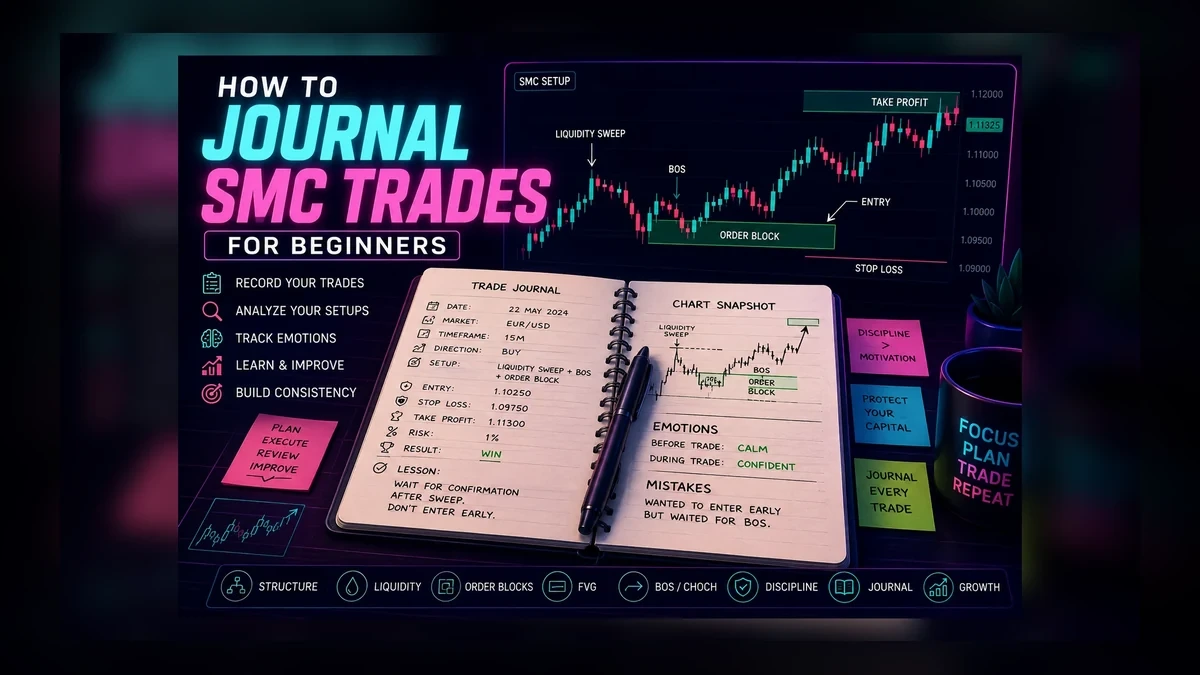
Premium and Discount in SMC Trading is one of the most important concepts in Smart Money Concepts because it helps traders understand where price is expensive and where price is cheap within a range. After learning market structure, BOS, CHOCH, liquidity, order blocks, and fair value gaps, the next logical step is understanding Premium and Discount in SMC Trading. This concept helps traders stop entering randomly and start entering with better location.
Premium and Discount in SMC Trading is based on a simple idea. If price is within a range, then the upper half of that range is considered premium and the lower half is considered discount. In bullish conditions, traders often prefer buying from discount. In bearish conditions, traders often prefer selling from premium. That is why Premium and Discount in SMC Trading is not just theory. It is a practical way to improve timing, reduce emotional entries, and align with better risk-to-reward.
What Is Premium and Discount in SMC Trading
Premium and Discount in SMC Trading refers to price position within a defined dealing range. A dealing range is usually drawn between a significant swing high and swing low. Once that range is marked, the midpoint becomes the equilibrium. Above the midpoint is premium, and below the midpoint is discount.
In Premium and Discount in SMC Trading, premium means price is trading at a relatively higher zone within the range. Discount means price is trading at a relatively lower zone within the same range. This helps traders judge whether price is located in a favorable area for buying or selling.
The basic logic of Premium and Discount in SMC Trading is simple:
- buy low in bullish conditions
- sell high in bearish conditions
This sounds obvious, but many traders still ignore it and enter in the wrong half of the range.
Why Premium and Discount in SMC Trading Matters
Premium and Discount in SMC Trading matters because entry location affects everything. A trader may have the right bias but the wrong entry zone. For example, if the market is bullish but you buy from premium, your risk becomes worse and your reward becomes smaller. If the market is bearish but you sell from discount, the same problem happens.
This is why Premium and Discount in SMC Trading improves trade quality. It helps traders:
- choose better entry zones
- reduce poor chase entries
- improve stop loss placement
- improve risk-to-reward ratio
- align entries with smart money logic
Without understanding Premium and Discount in SMC Trading, many traders enter too high in bullish conditions and too low in bearish conditions.
Premium and Discount in SMC Trading and Dealing Range
Premium and Discount in SMC Trading starts with the dealing range. A dealing range is formed between a meaningful swing low and a meaningful swing high. This range becomes the framework for measuring price location.
In Premium and Discount in SMC Trading, the range should not be random. It should come from structure. For example:
- in a bullish market, you may measure from a key swing low to a key swing high
- in a bearish market, you may still define the major range using the meaningful high and low that price is trading within
Once this range is defined, you can identify premium, discount, and equilibrium. This is the foundation of Premium and Discount in SMC Trading.
Premium and Discount in SMC Trading and Equilibrium
Premium and Discount in SMC Trading includes an important concept called equilibrium. Equilibrium is the midpoint of the dealing range. It is the fair middle area between the high and low of the range.
In Premium and Discount in SMC Trading, equilibrium helps divide the chart into two halves:
- upper half = premium
- lower half = discount
This midpoint is important because price often reacts around it, especially when the market is deciding whether to continue, retrace, or rebalance. Traders use equilibrium to stay organized and avoid buying too high or selling too low.
A simple way to think about Premium and Discount in SMC Trading is:
- premium = above equilibrium
- discount = below equilibrium
Premium and Discount in SMC Trading and Bullish Conditions
Premium and Discount in SMC Trading becomes very useful in bullish structure. If the market is bullish, then traders generally prefer to buy from discount zones rather than buying from premium zones. This is because discount offers a better price within the current range.
In Premium and Discount in SMC Trading, a bullish setup becomes stronger when:
- the market structure is bullish
- price retraces into discount
- liquidity has already been taken
- bullish order block or FVG aligns
- confirmation appears after retracement
A lot of beginner mistakes happen when traders see a bullish move and buy very late in premium. But Premium and Discount in SMC Trading teaches patience. Let price return into a cheaper area if structure supports it.
Premium and Discount in SMC Trading and Bearish Conditions
Premium and Discount in SMC Trading is equally important in bearish conditions. If the market is bearish, traders generally prefer selling from premium zones instead of selling from discount zones. This gives a better location to enter shorts.
In Premium and Discount in SMC Trading, a bearish setup becomes stronger when:
- bearish structure is clear
- price retraces into premium
- buy-side liquidity was taken
- bearish order block or bearish FVG aligns
- bearish confirmation appears in the premium zone
This is one of the most practical uses of Premium and Discount in SMC Trading. It helps traders avoid selling after price has already fallen too much.
Premium and Discount in SMC Trading and Entry Location
Premium and Discount in SMC Trading is all about entry location. Many traders focus only on direction. They ask, “Will price go up or down?” But Premium and Discount in SMC Trading asks a second important question: “Where should I enter?”
This second question is very important because even if your direction is right, bad location can still hurt your trade. Buying at premium in a bullish market may give poor reward. Selling at discount in a bearish market may do the same.
That is why Premium and Discount in SMC Trading helps traders improve precision. Direction tells you what to do. Location tells you where to do it.
Premium and Discount in SMC Trading and Liquidity
Premium and Discount in SMC Trading works best when combined with liquidity. Suppose price is bullish overall, but before moving higher it sweeps sell-side liquidity and then trades in discount. That can become a strong area of interest.
In the same way, if price is bearish overall, sweeps buy-side liquidity, and then trades in premium, that may offer a better bearish setup. This is why Premium and Discount in SMC Trading should not be used alone. It becomes far more powerful when combined with liquidity logic.
A simple use of Premium and Discount in SMC Trading is:
- bullish market + discount + sell-side sweep = stronger buy idea
- bearish market + premium + buy-side sweep = stronger sell idea
Premium and Discount in SMC Trading and Order Blocks
Premium and Discount in SMC Trading becomes even more effective when combined with order blocks. If a bullish order block sits in discount, it becomes more attractive in a bullish setup. If a bearish order block sits in premium, it becomes more attractive in a bearish setup.
This is because Premium and Discount in SMC Trading gives location logic, while order blocks give zone logic. When both align, the setup becomes cleaner.
For example:
- bullish structure
- price enters discount
- bullish order block sits there
- displacement follows
This kind of alignment is one of the most powerful uses of Premium and Discount in SMC Trading.
Premium and Discount in SMC Trading and Fair Value Gaps
Premium and Discount in SMC Trading also works very well with fair value gaps. A bullish FVG inside discount can become a cleaner long setup in bullish structure. A bearish FVG inside premium can become a stronger short zone in bearish structure.
This is why many traders use Premium and Discount in SMC Trading together with FVG. The fair value gap shows an imbalance zone. Premium and discount show whether that zone is located in a favorable part of the range.
So the real power of Premium and Discount in SMC Trading is not the midpoint alone. The real power comes when it aligns with other SMC concepts.
Premium and Discount in SMC Trading and Higher Timeframe Bias
Premium and Discount in SMC Trading becomes more reliable when it matches higher timeframe bias. A lower timeframe discount zone may fail if the higher timeframe is strongly bearish. A lower timeframe premium zone may fail if the higher timeframe is clearly bullish.
This is why serious traders use top-down analysis with Premium and Discount in SMC Trading. The higher timeframe provides the directional bias, and the lower timeframe helps refine the entry.
A simple process for Premium and Discount in SMC Trading is:
- identify higher timeframe trend
- define the major dealing range
- mark premium, equilibrium, and discount
- wait for liquidity interaction
- use structure and confirmation for entry
This makes the concept much more useful.
Premium and Discount in SMC Trading and Common Mistakes
Premium and Discount in SMC Trading is simple, but many traders still misuse it. One common mistake is drawing the range incorrectly. Another mistake is forcing premium and discount zones on weak or irrelevant swings. Some traders also treat premium and discount like magical zones without waiting for confirmation.
Common mistakes in Premium and Discount in SMC Trading include:
- using random highs and lows for the range
- ignoring market structure
- buying discount in strong bearish conditions
- selling premium in strong bullish conditions
- using premium and discount without liquidity or confirmation
- forcing trades just because price reached a half of the range
The solution is simple. Keep Premium and Discount in SMC Trading connected with structure, liquidity, and real market context.
Premium and Discount in SMC Trading and How to Practice
Premium and Discount in SMC Trading improves with chart study. Open past charts and do this:
- mark a meaningful swing high
- mark a meaningful swing low
- define the dealing range
- mark the midpoint
- label premium and discount
- observe how price reacted in each half
- check if bullish setups formed in discount
- check if bearish setups formed in premium
This regular practice helps you understand Premium and Discount in SMC Trading much faster. The more you study, the easier it becomes to avoid poor entry locations.
Conclusion
Premium and Discount in SMC Trading is one of the most practical concepts in Smart Money Concepts because it teaches traders how to judge location inside a range. It helps answer a very important question: is price relatively expensive or relatively cheap right now? Once you understand Premium and Discount in SMC Trading, your entries become more precise and your patience improves.
The biggest strength of Premium and Discount in SMC Trading is simplicity. It is easy to understand but powerful when used correctly. If you combine Premium and Discount in SMC Trading with market structure, liquidity, order blocks, and fair value gaps, you can build much cleaner setups with better reward-to-risk potential.
FAQs
What is Premium and Discount in SMC Trading?
Premium and Discount in SMC Trading refers to price location inside a dealing range, where the upper half is premium and the lower half is discount.
What is equilibrium in Premium and Discount in SMC Trading?
In Premium and Discount in SMC Trading, equilibrium is the midpoint of the dealing range. It divides premium and discount.
Why is Premium and Discount in SMC Trading important?
Premium and Discount in SMC Trading is important because it helps traders improve entry location and avoid buying too high or selling too low.
Should I buy only in discount in SMC Trading?
In bullish conditions, Premium and Discount in SMC Trading generally favors buying in discount, but confirmation and structure still matter.
Should I sell only in premium in SMC Trading?
In bearish conditions, Premium and Discount in SMC Trading generally favors selling in premium, but context and confirmation are still required.

A stock market enthusiast with hands-on experience in trading. He writes simple and practical content to help people understand the market better.


