


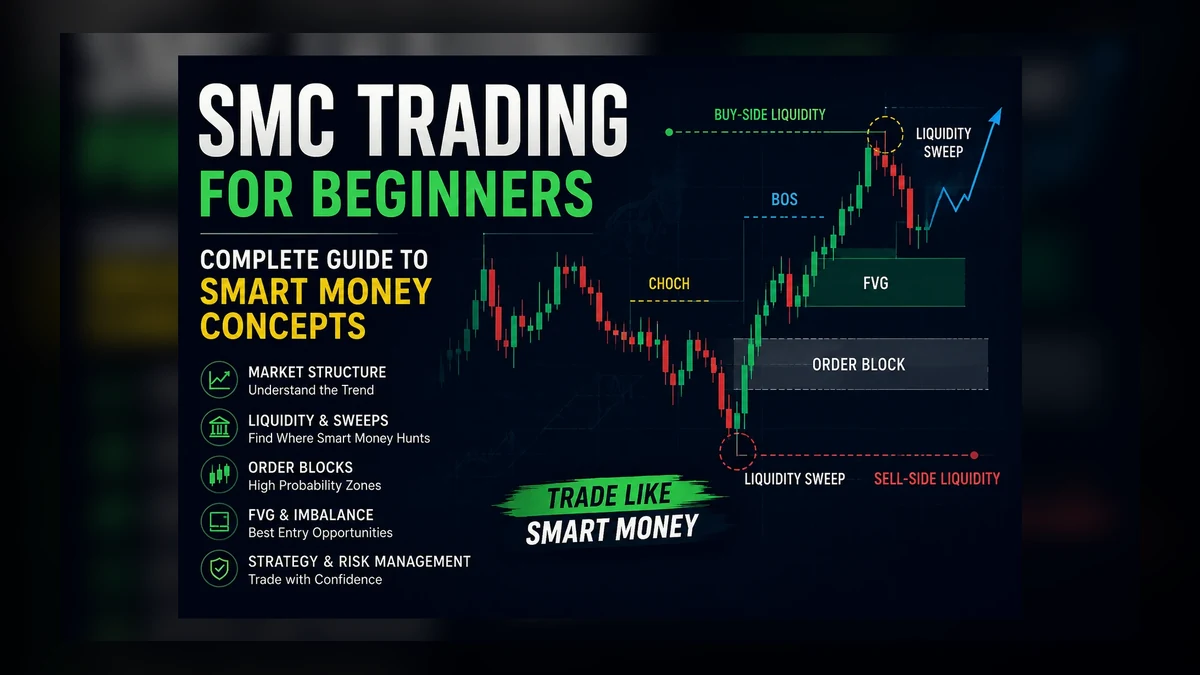
Liquidity in SMC Trading is one of the most important concepts in Smart Money Concepts. If you do not understand Liquidity in SMC Trading, then market structure, order blocks, BOS, CHOCH, and fair value gaps will often feel incomplete. Many traders can read candles and trend, but they still get trapped because they do not understand where price is actually trying to go. That is exactly why Liquidity in SMC Trading matters so much.
Liquidity in SMC Trading simply means the areas in the market where orders are resting. These orders may be stop losses, breakout entries, pending buy orders, or pending sell orders. Smart money needs liquidity to enter and exit large positions, and this is why price often moves toward certain obvious highs and lows before making the real move. Once you understand Liquidity in SMC Trading, the market starts looking less random and much more intentional.
What Is Liquidity in SMC Trading
Liquidity in SMC Trading means the pool of available orders sitting in the market. In simple words, liquidity is where many traders are likely to place their stop losses or entries. These zones attract price because large participants need enough orders on the other side to fill their bigger positions.
For example, when many retail traders place stop loss above a previous high, that area becomes a source of buy-side liquidity. When many retail traders place stop loss below a previous low, that area becomes a source of sell-side liquidity. In Liquidity in SMC Trading, price often moves toward these levels before deciding the next major direction.
That is why Liquidity in SMC Trading is not just about support and resistance. It is about understanding where the market is likely to hunt orders before expanding.
Why Liquidity in SMC Trading Matters
Liquidity in SMC Trading matters because market makers, institutions, and big participants cannot always enter large positions at random places. They need volume and available orders. The easiest place to find those orders is around obvious highs, obvious lows, equal highs, equal lows, and breakout zones.
When traders do not understand Liquidity in SMC Trading, they often buy exactly where smart money is preparing to sell, or sell exactly where smart money is preparing to buy. This is why many traders feel the market always takes their stop loss first and then moves in the expected direction. In many cases, that is simply liquidity being taken.
Understanding Liquidity in SMC Trading helps traders:
- avoid emotional entries
- stop chasing obvious breakouts blindly
- understand stop hunts
- wait for confirmation after a sweep
- align with higher-probability moves
Liquidity in SMC Trading and Buy-Side Liquidity
Liquidity in SMC Trading includes buy-side liquidity and sell-side liquidity. Buy-side liquidity usually sits above highs. This includes:
- previous swing highs
- equal highs
- short-term resistance highs
- breakout zones where buyers may enter
In Liquidity in SMC Trading, price often pushes above these highs because many stop losses of short sellers are placed there, and many breakout buyers also enter there. This creates a pool of buy orders, which can be used by smart money.
A common example of Liquidity in SMC Trading is when price moves above a visible high, triggers breakout traders, takes short seller stop losses, and then suddenly reverses downward. That move above the high was not random. It was likely a liquidity sweep.
Liquidity in SMC Trading and Sell-Side Liquidity
Liquidity in SMC Trading also includes sell-side liquidity. Sell-side liquidity usually sits below lows. This includes:
- previous swing lows
- equal lows
- obvious support lows
- breakdown zones where sellers may enter
In Liquidity in SMC Trading, price often moves below these lows because long traders keep their stop losses there, and breakout sellers also enter there. This creates a pool of sell orders.
A common example of Liquidity in SMC Trading is when price dips below a visible low, takes stop losses, attracts panic sellers, and then sharply moves upward. That low was used as a liquidity source. This is why many traders get trapped near obvious support breaks.
Liquidity in SMC Trading and Equal Highs
Liquidity in SMC Trading becomes very interesting around equal highs. Equal highs happen when price forms two or more highs at nearly the same level. Many traders see these highs as resistance, and they place stops just above them. This creates buy-side liquidity.
In Liquidity in SMC Trading, equal highs are attractive because they are obvious. Smart money knows that retail traders can clearly see them. That is why price often moves above equal highs before rejecting. This move is often called a liquidity grab or stop hunt.
Not every equal high will cause reversal, but in Liquidity in SMC Trading, equal highs are important because they often act as magnets for price.
Liquidity in SMC Trading and Equal Lows
Liquidity in SMC Trading also pays close attention to equal lows. Equal lows happen when price forms two or more lows at nearly the same level. Many traders see these lows as support, and they place stops just below them. This creates sell-side liquidity.
Because equal lows are easy to identify, they become important in Liquidity in SMC Trading. Price often goes below them, takes those stops, and then reacts upward. This is one of the most common traps in the market.
A trader who understands Liquidity in SMC Trading does not panic just because price breaks a visible low. Instead, they ask a better question: Was this a real breakdown, or was this just a liquidity sweep before expansion?
Liquidity in SMC Trading and Liquidity Sweep
Liquidity in SMC Trading becomes easier when you understand liquidity sweeps. A liquidity sweep happens when price moves into a liquidity zone, takes those orders, and then reacts strongly. This reaction can happen in the same direction afterward or in the opposite direction depending on context.
For example, in Liquidity in SMC Trading, price may sweep buy-side liquidity above a previous high and then reverse bearish. Or price may sweep sell-side liquidity below a previous low and then reverse bullish.
The main idea is simple: price first takes liquidity, then often shows intent.
A liquidity sweep in Liquidity in SMC Trading becomes more meaningful when:
- it happens at a clear liquidity zone
- it is followed by strong rejection
- structure shifts after the sweep
- displacement appears after the sweep
Liquidity in SMC Trading and Liquidity Grab
Liquidity in SMC Trading often uses the terms liquidity sweep and liquidity grab in a similar way. A liquidity grab is usually a quick move into a liquidity area to take stops and trigger orders. The difference is mostly in how traders describe the speed or intent of the move.
In Liquidity in SMC Trading, a liquidity grab is usually seen as a sharper stop-hunt move. It may happen quickly and then reverse strongly. This is why traders who enter too early at obvious highs or lows often get trapped.
When studying Liquidity in SMC Trading, the important thing is not the label. The important thing is to see that price intentionally visited a liquidity pool before making the real move.
Liquidity in SMC Trading and Stop Hunts
Liquidity in SMC Trading is directly connected with stop hunts. A stop hunt happens when price moves to an area where many traders placed their stop losses. This is one of the clearest examples of liquidity being taken.
In Liquidity in SMC Trading, stop hunts are not treated as bad luck. They are seen as part of market behavior. The market needs liquidity, and obvious stop zones provide that liquidity.
This does not mean every stop loss hit is manipulation. But Liquidity in SMC Trading teaches that obvious stop locations are often vulnerable, especially near:
- equal highs
- equal lows
- prior swing points
- breakout levels
- clean support and resistance edges
This is why traders using Liquidity in SMC Trading often wait for the sweep first instead of entering before it.
Liquidity in SMC Trading and Inducement
Liquidity in SMC Trading also includes inducement. Inducement is when price creates a small obvious setup or local structure that encourages traders to enter too early. Then price takes those positions before moving in the actual direction.
For example, in Liquidity in SMC Trading, price may create a small bullish pullback that looks like a perfect buy setup. Many traders enter, keeping stop loss below the nearby low. Price then drops below that low, takes their stops, and only after that moves upward.
Inducement is important because Liquidity in SMC Trading is not only about obvious highs and lows. Sometimes the market creates short-term traps to collect more orders before the main move.
Liquidity in SMC Trading and Market Structure
Liquidity in SMC Trading works best when combined with market structure. Liquidity alone is not enough. If price sweeps a low in a bullish higher timeframe market and then gives bullish confirmation, that is very different from price sweeping a low in a strong bearish trend.
That is why Liquidity in SMC Trading must always be read with:
- higher timeframe trend
- key structure points
- BOS or CHOCH
- displacement
- reaction zones
A sweep without context can be misleading. But a sweep with structure alignment becomes far more powerful. This is one of the biggest strengths of Liquidity in SMC Trading.
Liquidity in SMC Trading and Entry Confirmation
Liquidity in SMC Trading is not just about spotting sweeps. It is also about waiting for confirmation after the sweep. Many beginners see liquidity taken and enter immediately, but this can still be risky.
A better process in Liquidity in SMC Trading is:
- identify liquidity zone
- wait for price to sweep it
- look for rejection or displacement
- wait for structure confirmation
- enter on retest or cleaner confirmation
This makes Liquidity in SMC Trading far more practical. It reduces impulsive trading and improves entry quality.
Liquidity in SMC Trading and Common Mistakes
Liquidity in SMC Trading is powerful, but traders still make common mistakes. One major mistake is assuming every sweep means reversal. Another mistake is marking liquidity everywhere and losing clarity.
Some common mistakes in Liquidity in SMC Trading are:
- treating every high and low as major liquidity
- entering before the sweep happens
- ignoring higher timeframe structure
- assuming every breakout is fake
- assuming every stop hunt must reverse immediately
- not waiting for confirmation after liquidity is taken
The solution is simple. Keep Liquidity in SMC Trading clean and structured. Focus on obvious pools and combine them with context.
How to Practice Liquidity in SMC Trading
Liquidity in SMC Trading becomes clearer with chart practice. Open past charts and mark:
- previous swing highs
- previous swing lows
- equal highs
- equal lows
- sweep points
- reaction after sweep
Then ask:
- What liquidity did price take?
- Did price continue or reverse?
- Was there BOS or CHOCH after the sweep?
- Was the sweep aligned with higher timeframe structure?
Doing this regularly will improve your understanding of Liquidity in SMC Trading very quickly.
Conclusion
Liquidity in SMC Trading is one of the most practical and powerful ideas in Smart Money Concepts. It explains why price often moves toward obvious highs and lows before making the real move. Once you understand Liquidity in SMC Trading, you start seeing stop hunts, sweeps, grabs, and inducement more clearly.
The biggest benefit of Liquidity in SMC Trading is that it helps you stop trading like the crowd. Instead of entering at obvious breakout points, you begin to wait for the liquidity event first and the confirmation after it. A strong understanding of Liquidity in SMC Trading can improve patience, reduce traps, and make SMC trading much easier to apply.
ALSO READ: BOS and CHOCH in SMC Trading: Complete Beginner Guide
ALSO READ: Price Action in SMC Trading: Complete Beginner Guide for Beginners
ALSO READ: SMC Trading for Beginners: Complete Guide to Smart Money Concepts In 2026
FAQs
What is Liquidity in SMC Trading?
Liquidity in SMC Trading means the areas where many orders are resting, such as stop losses, breakout entries, and pending buy or sell orders.
What is buy-side liquidity in SMC Trading?
In Liquidity in SMC Trading, buy-side liquidity usually sits above highs, where short seller stop losses and breakout buy orders are placed.
What is sell-side liquidity in SMC Trading?
In Liquidity in SMC Trading, sell-side liquidity usually sits below lows, where long trader stop losses and breakdown sell orders are placed.
What is a liquidity sweep in SMC Trading?
A liquidity sweep in Liquidity in SMC Trading happens when price moves into a liquidity zone, takes those orders, and then reacts strongly.
Why is Liquidity in SMC Trading important?
Liquidity in SMC Trading is important because it helps traders understand where price is likely to move before expansion and why many obvious breakout or breakdown setups fail.
If you want, I can now send the next topic — Order Block in SMC Trading in the same style.

A stock market enthusiast with hands-on experience in trading. He writes simple and practical content to help people understand the market better.


