


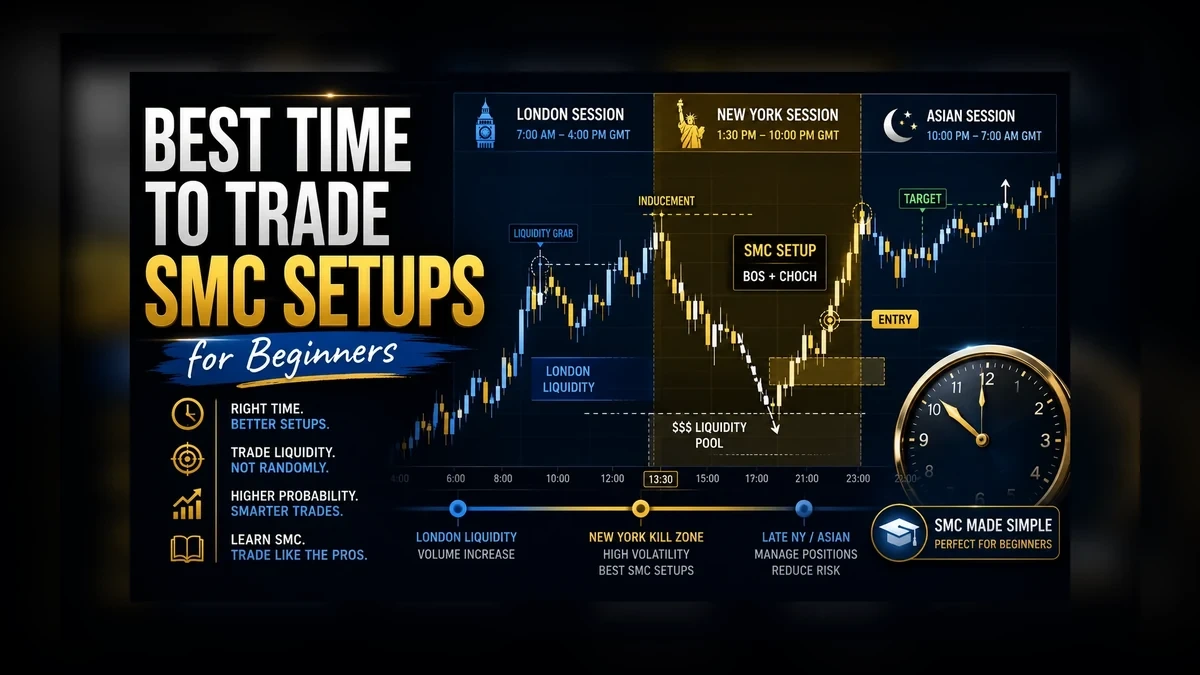
Order Block in SMC Trading is one of the most searched and discussed topics in Smart Money Concepts because many traders believe it helps identify where smart money entered the market. After learning market structure, BOS, CHOCH, and liquidity, the next important concept is Order Block in SMC Trading. If you understand it properly, you can start finding cleaner entry zones with better risk-to-reward.
Order Block in SMC Trading is not just about marking the last red candle before a bullish move or the last green candle before a bearish move. That is only a basic idea. The real understanding of Order Block in SMC Trading comes from context. A valid order block usually works best when it appears after liquidity is taken, when displacement is visible, and when market structure supports the move. That is why traders should not mark random candles and call everything an order block.
What Is Order Block in SMC Trading
Order Block in SMC Trading usually refers to a key price zone from where a strong move started. In simple terms, it is often considered the area where large participants placed orders before price moved aggressively away. Traders use Order Block in SMC Trading to find possible reaction zones where price may return before continuing in the original direction.
A bullish Order Block in SMC Trading is usually the last bearish candle before a strong bullish move. A bearish Order Block in SMC Trading is usually the last bullish candle before a strong bearish move. But the candle alone is not enough. The zone becomes more meaningful when it is linked with:
- liquidity sweep
- displacement
- BOS or CHOCH
- strong rejection or continuation
- higher timeframe context
This is why Order Block in SMC Trading must always be studied with structure and liquidity.
Why Order Block in SMC Trading Matters
Order Block in SMC Trading matters because it helps traders stop chasing the market. Many beginners enter after a big move is already done, but price often retraces before continuing. This retracement is where Order Block in SMC Trading becomes useful. It gives a possible area where price may return and react.
The real value of Order Block in SMC Trading is that it helps traders:
- identify potential entry zones
- place tighter stop loss
- avoid random entries
- align with smart money behavior
- improve trade timing
Without understanding Order Block in SMC Trading, many traders enter too late or enter in weak areas. A strong order block can give a structured approach instead of emotional entries.
Order Block in SMC Trading and Bullish Order Block
Order Block in SMC Trading becomes bullish when price leaves a zone with strong upward intent. A bullish order block is usually the last bearish candle before a strong impulsive bullish move. This move should ideally break structure or show strong displacement.
In Order Block in SMC Trading, a bullish order block works best when:
- sell-side liquidity was already taken
- price moved up aggressively after the candle
- bullish BOS or CHOCH followed
- price later returns into that zone with a clean pullback
A bullish Order Block in SMC Trading is not just a demand zone. It is a zone with context. If price returns to it after confirming bullish structure, traders may look for continuation entries from there.
Order Block in SMC Trading and Bearish Order Block
Order Block in SMC Trading becomes bearish when price leaves a zone with strong downward intent. A bearish order block is usually the last bullish candle before an impulsive bearish move. That bearish move should ideally break structure, sweep liquidity, or show clear imbalance.
In Order Block in SMC Trading, a bearish order block becomes stronger when:
- buy-side liquidity was already taken
- price dropped with strong bearish displacement
- bearish BOS or CHOCH followed
- price later retraces back into the order block
A bearish Order Block in SMC Trading is useful because it gives traders a possible premium area to sell in a bearish market. But again, context matters more than just the candle.
Order Block in SMC Trading and Valid Order Block Rules
Order Block in SMC Trading becomes much more effective when traders know how to separate valid zones from weak ones. One of the biggest beginner mistakes is marking every candle as an order block. A valid Order Block in SMC Trading usually has some important qualities.
A stronger Order Block in SMC Trading often has:
- a clear impulsive move away
- displacement after the candle
- market structure support
- liquidity sweep before the move
- price inefficiency or fair value gap nearby
- a clean return into the zone
If these things are missing, then the Order Block in SMC Trading may be weak or low probability. The more confirmations you have, the better the zone usually becomes.
Order Block in SMC Trading and Displacement
Order Block in SMC Trading becomes more meaningful when it is followed by displacement. Displacement means a strong directional move with momentum. This move shows that the market left the zone with intent.
If price slowly moves away from a candle without strength, then that zone may not be a strong Order Block in SMC Trading. But if price explodes away with large candles, imbalance, and structure break, then the zone becomes much more interesting.
This is why Order Block in SMC Trading should not be marked first and justified later. Price should first prove the zone by moving away strongly. That move is what makes the block important.
Order Block in SMC Trading and Liquidity Sweep
Order Block in SMC Trading works best when liquidity is involved. Many strong order blocks form only after price first takes liquidity from obvious highs or lows. This is because smart money often collects liquidity before moving in the real direction.
For example, in Order Block in SMC Trading, price may sweep equal lows, then show a strong bullish move, break structure, and leave behind a bullish order block. In this case, the order block is much stronger because it formed after liquidity was taken.
The same idea applies to bearish setups. A bearish Order Block in SMC Trading becomes more meaningful when price first sweeps equal highs or buy-side liquidity and then drops strongly. This shows intent, not randomness.
Order Block in SMC Trading and BOS and CHOCH
Order Block in SMC Trading becomes easier to trust when BOS or CHOCH confirms the move. If price leaves an order block but no structure shift happens, then the zone may still be weak. But if price leaves the order block and then breaks structure, the setup becomes stronger.
This is why many traders combine Order Block in SMC Trading with:
- bullish CHOCH
- bearish CHOCH
- bullish BOS
- bearish BOS
For example, a bullish Order Block in SMC Trading is much more useful when the market was previously bearish, then gives a bullish CHOCH, then leaves a bullish order block, and later retests it. The same structure logic applies to bearish order blocks too.
Order Block in SMC Trading and Entry Strategy
Order Block in SMC Trading becomes practical when you know how to build an entry model around it. A simple beginner model for Order Block in SMC Trading can be:
- Identify higher timeframe bias
- Mark liquidity zone
- Wait for sweep
- Wait for displacement
- Identify the order block
- Wait for price to return into the zone
- Look for confirmation
- Enter with proper stop loss and target
This makes Order Block in SMC Trading much safer than blindly placing limit orders everywhere. Some traders enter directly at the block. Others wait for lower timeframe confirmation. For beginners, waiting for some confirmation is often the better approach.
Order Block in SMC Trading and Stop Loss Placement
Order Block in SMC Trading is very useful for risk management because it helps define invalidation clearly. In a bullish order block, stop loss is often placed below the block or below the swing low that created the setup. In a bearish order block, stop loss is often placed above the block or above the swing high.
The benefit of Order Block in SMC Trading is that it often gives tighter risk compared to chasing price after a strong move. But stop placement should still make sense. A stop that is too tight may get hit by normal volatility.
That is why Order Block in SMC Trading should always be combined with real invalidation logic, not just a random small stop.
Order Block in SMC Trading and Higher Timeframe Bias
Order Block in SMC Trading becomes more effective when it aligns with higher timeframe structure. A bullish order block on a 5-minute chart may fail if the daily chart is strongly bearish. A bearish order block on a lower timeframe may fail if the higher timeframe is clearly bullish.
This is why serious traders use top-down analysis with Order Block in SMC Trading. First they check the bigger picture, then they use smaller timeframe order blocks for refined entry. This approach improves clarity and reduces random trades.
A simple rule is:
- higher timeframe gives direction
- lower timeframe gives entry
This makes Order Block in SMC Trading much more practical and consistent.
Order Block in SMC Trading and Common Mistakes
Order Block in SMC Trading is powerful, but beginners often misuse it. The biggest mistake is marking every last candle before a move as an order block. Another mistake is ignoring structure and liquidity. Many traders also place orders in old zones without checking whether that order block is still relevant.
Some common mistakes in Order Block in SMC Trading are:
- marking too many order blocks
- ignoring higher timeframe bias
- entering without liquidity sweep
- ignoring displacement
- treating every retracement as order block retest
- using stale order blocks from old price action
- entering without BOS or CHOCH context
To avoid these mistakes, keep Order Block in SMC Trading clean and selective. Fewer high-quality zones are always better than dozens of weak zones.
Order Block in SMC Trading and How to Practice
Order Block in SMC Trading becomes easier through chart replay and daily observation. Open past charts and do this:
- mark the main trend
- identify liquidity sweep
- identify displacement
- mark the last candle before the strong move
- check if BOS or CHOCH followed
- see whether price later returned to that block
- observe how price reacted there
This routine helps build confidence. The more you study old charts, the easier Order Block in SMC Trading becomes to understand in live conditions.
Conclusion
Order Block in SMC Trading is one of the most useful concepts in Smart Money Concepts because it helps traders locate possible smart money zones. But the real power of Order Block in SMC Trading comes only when it is combined with liquidity, market structure, BOS, CHOCH, and displacement. On its own, a candle is just a candle. With context, it becomes a high-probability zone.
If you want to use Order Block in SMC Trading the right way, do not mark random blocks. Focus on the best setups only. Wait for sweeps, wait for structure shift, and then use the order block for entry planning. A good understanding of Order Block in SMC Trading can improve timing, risk control, and trade quality in a big way.
ALSO READ: BOS and CHOCH in SMC Trading: Complete Beginner Guide
ALSO READ: Price Action in SMC Trading: Complete Beginner Guide for Beginners
ALSO READ: SMC Trading for Beginners: Complete Guide to Smart Money Concepts In 2026
FAQs
What is Order Block in SMC Trading?
Order Block in SMC Trading is a price zone, usually the last opposite candle before a strong move, from where smart money may have entered the market.
What is a bullish Order Block in SMC Trading?
A bullish Order Block in SMC Trading is usually the last bearish candle before a strong bullish move.
What is a bearish Order Block in SMC Trading?
A bearish Order Block in SMC Trading is usually the last bullish candle before a strong bearish move.
How do you know if an Order Block in SMC Trading is valid?
A valid Order Block in SMC Trading usually has displacement, liquidity context, structure support, and a strong move away from the zone.
Is every Order Block in SMC Trading tradable?
No. Not every Order Block in SMC Trading is tradable. Stronger blocks usually appear with liquidity sweep, BOS or CHOCH, and higher timeframe alignment.

A stock market enthusiast with hands-on experience in trading. He writes simple and practical content to help people understand the market better.


