


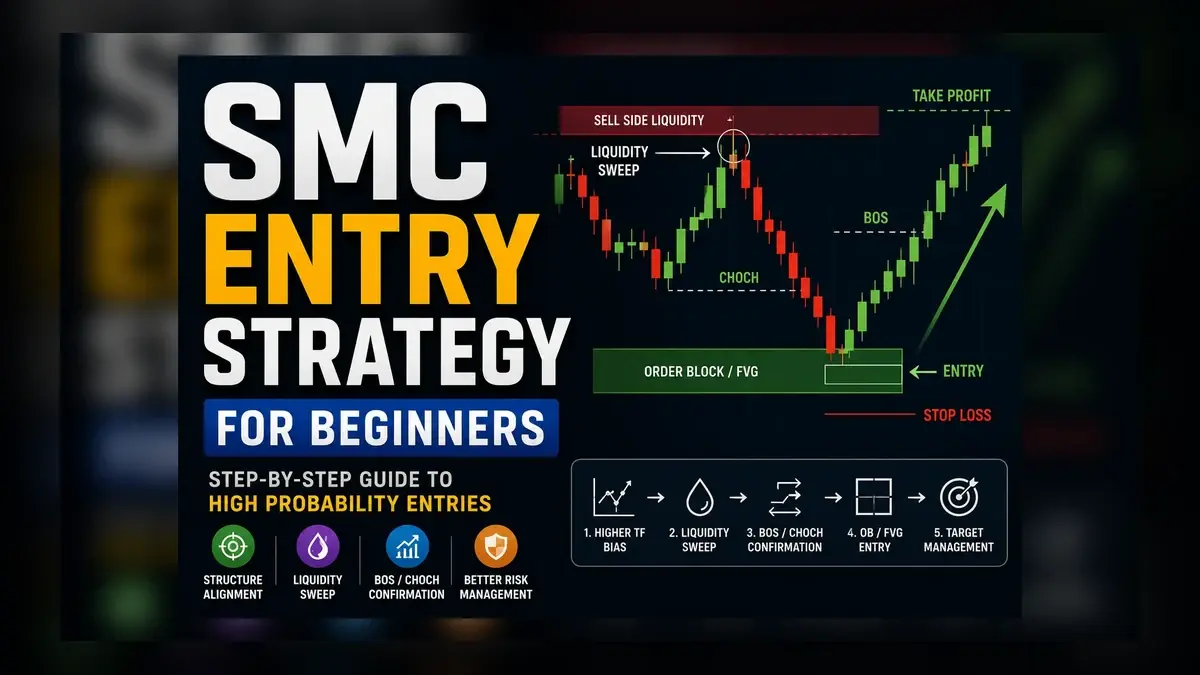
SMC Trading Psychology for Beginners is one of the most important topics in Smart Money Concepts because even the best analysis can fail if the trader’s mindset is weak. A trader may understand market structure, BOS, CHOCH, liquidity, order blocks, fair value gaps, premium and discount, multi timeframe analysis, entry strategy, and risk management, but without strong SMC Trading Psychology for Beginners, the execution often becomes inconsistent.
This is where many traders struggle. They know the setup, but they enter too early because of fear of missing out. They know the invalidation level, but they move stop loss because they do not want to accept a loss. They know the daily loss limit, but they keep trading because they want revenge. That is why SMC Trading Psychology for Beginners matters so much. It is the part that separates knowledge from performance.
What Is SMC Trading Psychology for Beginners
SMC Trading Psychology for Beginners means the mindset, emotional control, and discipline required to apply Smart Money Concepts properly in live markets. It is about how a trader thinks, feels, reacts, and behaves before, during, and after a trade.
In simple words, SMC Trading Psychology for Beginners is not about learning new chart concepts. It is about learning how to stay calm and consistent while using the concepts you already know. A trader with strong psychology follows rules even under pressure. A trader with weak psychology breaks rules when emotions rise.
That is why SMC Trading Psychology for Beginners includes:
- patience
- discipline
- emotional control
- confidence without overconfidence
- acceptance of losses
- consistency in execution
- ability to wait for the right setup
- ability to stop when conditions are poor
Why SMC Trading Psychology for Beginners Matters
SMC Trading Psychology for Beginners matters because trading is not only technical. The market constantly tests emotions. You will face missed trades, fakeouts, losing streaks, stop hunts, drawdowns, and impulsive temptations. If your psychology is weak, even good setups can turn into bad results.
Strong SMC Trading Psychology for Beginners helps traders:
- follow their plan
- avoid emotional entries
- accept losses calmly
- stay patient for confirmation
- reduce overtrading
- remain disciplined during drawdown
- execute high-quality setups more consistently
Many traders think the biggest problem is strategy. But often the real issue is weak SMC Trading Psychology for Beginners. The setup may be correct, but the trader’s behavior ruins the outcome.
SMC Trading Psychology for Beginners and Emotional Trading
SMC Trading Psychology for Beginners starts with understanding emotional trading. Emotional trading happens when decisions are based on fear, greed, frustration, excitement, or impatience instead of structure and process.
For example, in weak SMC Trading Psychology for Beginners, a trader may:
- buy too late because price is moving fast
- enter early because they are afraid of missing the move
- close a good trade too soon because of fear
- hold a losing trade too long because of hope
- double the position after a loss because of anger
These behaviors damage consistency. Good SMC Trading Psychology for Beginners teaches that the market does not reward emotions. It rewards structure, patience, and discipline.
SMC Trading Psychology for Beginners and Fear
SMC Trading Psychology for Beginners must include understanding fear. Fear is one of the biggest emotional problems in trading. It appears in different forms:
- fear of missing out
- fear of taking a loss
- fear of entering after a losing streak
- fear of holding a winning trade
- fear of trusting the setup
Fear becomes dangerous when it changes decision-making. In weak SMC Trading Psychology for Beginners, traders often enter bad trades because of FOMO or skip good trades because they are scared. Both problems hurt consistency.
The solution in SMC Trading Psychology for Beginners is not removing fear completely. The real solution is building a process strong enough that fear does not control the trade.
SMC Trading Psychology for Beginners and Greed
SMC Trading Psychology for Beginners also includes learning how greed affects decisions. Greed often looks attractive because it hides behind ambition. A trader wants bigger profits, more trades, or faster account growth. But unchecked greed leads to poor behavior.
In weak SMC Trading Psychology for Beginners, greed may cause:
- overtrading
- increasing lot size too quickly
- refusing to take partial profits
- entering low-quality setups
- ignoring the plan to chase more profit
Greed makes traders forget process. Good SMC Trading Psychology for Beginners reminds you that trading is not about catching every move. It is about taking the best moves with discipline.
SMC Trading Psychology for Beginners and Patience
SMC Trading Psychology for Beginners becomes much stronger when patience is developed. SMC itself is a patient framework. Liquidity often needs time to form. Sweeps often come before the real move. Confirmation often appears after the zone is touched. If a trader is impatient, they will usually enter too early.
Patience in SMC Trading Psychology for Beginners means:
- waiting for higher timeframe bias
- waiting for liquidity interaction
- waiting for displacement
- waiting for BOS or CHOCH
- waiting for retest or confirmation
- waiting for quality instead of quantity
This is one of the biggest advantages of strong SMC Trading Psychology for Beginners. It protects the trader from forcing setups.
SMC Trading Psychology for Beginners and Discipline
SMC Trading Psychology for Beginners is impossible without discipline. Discipline means doing what your plan says, even when emotions try to push you somewhere else. Discipline is the difference between knowing and doing.
A disciplined trader with strong SMC Trading Psychology for Beginners:
- follows risk per trade
- respects stop loss
- avoids random entries
- waits for alignment
- stops after reaching daily limit
- reviews mistakes instead of hiding them
Discipline is not about perfection. It is about consistency. That is why SMC Trading Psychology for Beginners should focus more on rule-following than on trying to be right all the time.
SMC Trading Psychology for Beginners and Accepting Losses
SMC Trading Psychology for Beginners becomes healthier when a trader learns to accept losses properly. Losses are a normal part of trading. Even perfect SMC setups can fail. If a trader cannot accept a loss, then they will start making emotional changes that damage the account.
In weak SMC Trading Psychology for Beginners, traders often:
- widen stop loss
- remove stop loss
- add more size to a losing trade
- refuse to close invalidated ideas
- take revenge trades after loss
Healthy SMC Trading Psychology for Beginners teaches that a clean small loss is a good trading decision if the setup was valid and the rules were followed. This mindset reduces emotional damage and protects capital.
SMC Trading Psychology for Beginners and Revenge Trading
SMC Trading Psychology for Beginners must address revenge trading because it is one of the most destructive habits. Revenge trading happens when a trader takes impulsive setups after a loss because they want to recover quickly.
This usually comes from anger, frustration, and ego. Instead of waiting for a clean setup, the trader acts emotionally. In poor SMC Trading Psychology for Beginners, revenge trading often leads to:
- bigger losses
- more emotional pressure
- broken rules
- overtrading
- deeper drawdown
The fix is simple but not easy. Strong SMC Trading Psychology for Beginners means stopping after emotional damage and returning only when the mind is calm.
SMC Trading Psychology for Beginners and Overconfidence
SMC Trading Psychology for Beginners also includes controlling overconfidence. Many traders are careful during losing periods but reckless after a winning streak. A few good trades make them feel invincible. Then they start ignoring rules, taking lower-quality trades, and increasing size without reason.
This is one of the silent dangers in SMC Trading Psychology for Beginners. Overconfidence can destroy good momentum. Confidence is healthy when it comes from process. Overconfidence becomes dangerous when it comes from ego.
The right form of SMC Trading Psychology for Beginners is quiet confidence. Follow the process, respect the rules, and stay humble no matter what the last few trades did.
SMC Trading Psychology for Beginners and Expectations
SMC Trading Psychology for Beginners improves when expectations become realistic. Many beginners expect:
- instant consistency
- no losing streaks
- perfect entries
- fast account growth
- daily profits
These unrealistic expectations create frustration. Real trading is different. Even good traders have losses, drawdowns, missed trades, and boring weeks. Good SMC Trading Psychology for Beginners accepts that progress is slow and built over time.
If your expectations are wrong, then emotions become stronger. If your expectations are realistic, then discipline becomes easier. That is why SMC Trading Psychology for Beginners must be based on process, not fantasy.
SMC Trading Psychology for Beginners and Confidence
SMC Trading Psychology for Beginners also requires proper confidence. Confidence in trading should come from preparation, repetition, and process, not from hope. A trader becomes confident by seeing the same setup many times, journaling it, and learning how it behaves.
Good SMC Trading Psychology for Beginners builds confidence through:
- backtesting
- chart replay
- journaling
- following rules
- reviewing both wins and losses
This kind of confidence is stable. It does not collapse after one loss or explode after one win. That is the type of confidence beginners should aim for.
SMC Trading Psychology for Beginners and Routine
SMC Trading Psychology for Beginners becomes stronger when there is a routine. A consistent routine reduces impulsive behavior and helps the mind stay organized. Instead of reacting randomly to charts, the trader follows a planned process.
A strong SMC Trading Psychology for Beginners routine may include:
- checking higher timeframe bias first
- marking key liquidity zones
- waiting for session timing
- taking only pre-defined setups
- reviewing trades after market hours
- stopping after daily limit
Routine creates discipline. And discipline strengthens SMC Trading Psychology for Beginners over time.
SMC Trading Psychology for Beginners and Journaling
SMC Trading Psychology for Beginners improves faster when the trader journals both technical and emotional behavior. Many traders only note entry and exit, but that is not enough. To improve psychology, you must also record:
- what you felt before the trade
- whether you followed the plan
- whether fear or greed was involved
- why you entered
- why you exited
- what mistake repeated
- what you learned
This is one of the best tools for developing SMC Trading Psychology for Beginners. It shows patterns that are invisible when you rely only on memory.
SMC Trading Psychology for Beginners and Detachment from Outcomes
SMC Trading Psychology for Beginners becomes healthier when traders detach from individual outcomes. A single trade does not define you. A single loss does not mean your system is broken. A single win does not mean you are a genius.
This mindset is powerful. It keeps SMC Trading Psychology for Beginners focused on process instead of emotional reactions. The real question after a trade should be:
- Did I follow my plan?
- Was the setup valid?
- Was the risk controlled?
- Did I stay disciplined?
This is far more useful than reacting emotionally to the result.
SMC Trading Psychology for Beginners and Building Consistency
SMC Trading Psychology for Beginners is really about building consistency. Consistency does not mean winning every day. It means thinking, acting, and managing trades with the same disciplined process again and again.
Consistency in SMC Trading Psychology for Beginners comes from:
- repeating the same valid process
- avoiding emotional damage
- keeping risk fixed
- choosing quality setups
- learning from mistakes
- being patient through slow periods
This is how strong traders are built. Not by one perfect entry, but by consistent behavior.
How to Improve SMC Trading Psychology for Beginners
A simple way to improve SMC Trading Psychology for Beginners is to follow these steps:
- Reduce risk so pressure becomes manageable
- Trade fewer setups with higher quality
- Use a pre-trade checklist
- Stop after emotional damage
- Journal both technical and emotional mistakes
- Review losses without ego
- Focus on process, not daily profits
- Accept that patience is part of the edge
This kind of approach strengthens SMC Trading Psychology for Beginners in a realistic and practical way.
Conclusion
SMC Trading Psychology for Beginners is one of the most important parts of becoming a consistent trader because technical knowledge alone is not enough. The market constantly tests patience, discipline, fear control, and emotional stability. If psychology is weak, then even strong analysis gets damaged by impulsive decisions.
The biggest strength of SMC Trading Psychology for Beginners is that it brings control back to the trader. You cannot control the market, but you can control your behavior. And in trading, that makes a huge difference. If you build strong SMC Trading Psychology for Beginners, you will follow your rules better, protect your capital better, and use Smart Money Concepts much more effectively.
FAQs
What is SMC Trading Psychology for Beginners?
SMC Trading Psychology for Beginners means the mindset, emotional discipline, patience, and consistency needed to apply Smart Money Concepts properly in live trading.
Why is SMC Trading Psychology for Beginners important?
SMC Trading Psychology for Beginners is important because weak emotions can ruin even good setups, while strong discipline improves consistency and capital protection.
What is the biggest psychology problem in SMC trading?
In SMC Trading Psychology for Beginners, common problems include fear, greed, revenge trading, overconfidence, and impatience.
How can I improve SMC Trading Psychology for Beginners?
You can improve SMC Trading Psychology for Beginners through lower risk, better journaling, consistent routine, patience, and strict rule-following.
Can I become profitable with good psychology but average entries?
Strong SMC Trading Psychology for Beginners combined with good risk management can often outperform weak psychology with great entries, because behavior matters a lot in real trading.

A stock market enthusiast with hands-on experience in trading. He writes simple and practical content to help people understand the market better.


