


How to Build an SMC Trading Plan for Beginners is one of the most important topics in Smart Money Concepts because without a clear plan, even good analysis becomes inconsistent. A trader may understand market structure, BOS, CHOCH, liquidity, order blocks, fair value gaps, premium and discount, multi timeframe analysis, entry strategy, risk management, and psychology, but if there is no fixed plan, the results often become random.
That is why learning How to Build an SMC Trading Plan for Beginners matters so much. A trading plan is what turns knowledge into a process. It gives rules, structure, and discipline. Instead of reacting emotionally to every move, the trader follows a defined method. Once you understand How to Build an SMC Trading Plan for Beginners, trading becomes more organized, more repeatable, and far less stressful.
What Is How to Build an SMC Trading Plan for Beginners
How to Build an SMC Trading Plan for Beginners means creating a structured set of rules for how you will analyze, enter, manage, and review trades using Smart Money Concepts. It is not just about writing “I will follow structure.” A real plan explains exactly what you will trade, when you will trade, what setup you need, how much you will risk, and when you will stay out.
A proper How to Build an SMC Trading Plan for Beginners process usually includes:
- market and timeframe selection
- higher timeframe bias rules
- entry model
- confirmation rules
- stop loss and take profit rules
- risk management rules
- psychology rules
- journaling and review process
This is what makes How to Build an SMC Trading Plan for Beginners so important. It gives clarity before the trade even begins.
Why How to Build an SMC Trading Plan for Beginners Matters
How to Build an SMC Trading Plan for Beginners matters because most traders do not fail only because of poor analysis. They fail because they keep changing decisions in live market conditions. One day they wait for confirmation. The next day they enter without confirmation. One day they risk 1%. The next day they risk 5%. This inconsistency is the real problem.
That is why How to Build an SMC Trading Plan for Beginners helps traders:
- build consistency
- reduce emotional mistakes
- improve discipline
- avoid random entries
- control risk
- track performance clearly
Without learning How to Build an SMC Trading Plan for Beginners, many traders keep taking good ideas and executing them badly.
How to Build an SMC Trading Plan for Beginners and Market Selection
How to Build an SMC Trading Plan for Beginners begins with choosing what market you will trade. One of the biggest beginner mistakes is trying to trade everything at once. If you keep switching between forex, crypto, indices, gold, and stocks, your focus becomes weak.
A better How to Build an SMC Trading Plan for Beginners approach is to start with one market or a very small watchlist. This helps you learn how the instrument behaves and reduces unnecessary confusion.
When building How to Build an SMC Trading Plan for Beginners, decide:
- which asset you will trade
- which sessions you will focus on
- which instruments you understand best
- which markets fit your schedule
This creates a strong foundation.
How to Build an SMC Trading Plan for Beginners and Timeframe Selection
How to Build an SMC Trading Plan for Beginners also requires choosing your timeframes clearly. If you do not define your chart structure, then your analysis will keep changing. Some traders become confused because they check too many timeframes at once.
A simple how-to-build-an-SMC-trading-plan-for-beginners model can be:
- one higher timeframe for bias
- one middle timeframe for setup
- one lower timeframe for entry
For example:
- 4H for bias
- 1H for setup
- 15M for entry
Or:
- Daily for bias
- 4H for setup
- 1H for entry
This is one of the strongest parts of How to Build an SMC Trading Plan for Beginners because it gives structure to your chart reading.
How to Build an SMC Trading Plan for Beginners and Higher Timeframe Bias Rules
How to Build an SMC Trading Plan for Beginners becomes stronger when higher timeframe bias rules are fixed. Before every trading day, the trader should know the main direction of the market.
In your How to Build an SMC Trading Plan for Beginners, define:
- how you identify bullish bias
- how you identify bearish bias
- what counts as range
- where major liquidity sits
- whether price is in premium or discount
For example, a clear rule inside How to Build an SMC Trading Plan for Beginners can be:
- only buy when higher timeframe is bullish
- only sell when higher timeframe is bearish
- avoid trades when higher timeframe is unclear
These simple rules prevent many low-quality trades.
How to Build an SMC Trading Plan for Beginners and Setup Conditions
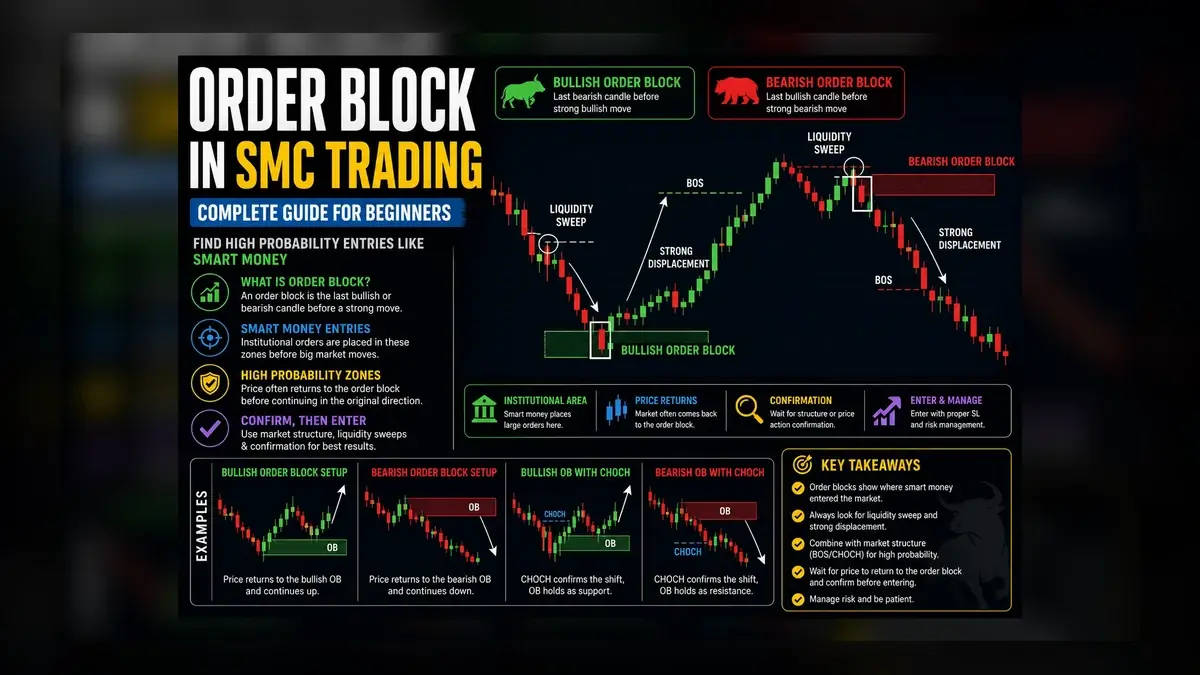
How to Build an SMC Trading Plan for Beginners must clearly define what setup you are allowed to take. Without setup conditions, you will start forcing trades everywhere. A good SMC plan should explain the exact sequence you need before entering.
A simple setup model in How to Build an SMC Trading Plan for Beginners may include:
- higher timeframe bias aligned
- price reaches a key zone
- liquidity sweep happens
- displacement appears
- BOS or CHOCH confirms
- price returns to order block or fair value gap
- entry confirmation appears
This is what makes How to Build an SMC Trading Plan for Beginners practical. It turns SMC from theory into step-by-step action.
How to Build an SMC Trading Plan for Beginners and Entry Rules
How to Build an SMC Trading Plan for Beginners should define your entry rules in simple language. This is very important because many traders know the setup but still enter differently every time.
Your How to Build an SMC Trading Plan for Beginners should answer:
- Do you enter at first touch?
- Do you wait for confirmation?
- What type of confirmation is valid?
- Which lower timeframe signal do you accept?
- What makes the setup invalid?
For beginners, a safer How to Build an SMC Trading Plan for Beginners rule is usually:
- wait for confirmation before entry
- do not enter only because price touched the zone
- look for lower timeframe reaction
This makes your entries more selective and more disciplined.
How to Build an SMC Trading Plan for Beginners and Stop Loss Rules
How to Build an SMC Trading Plan for Beginners must include stop loss rules. A stop loss should not be emotional or random. It should be based on the invalidation point of the setup.
Inside your How to Build an SMC Trading Plan for Beginners, you can define:
- stop goes below swept low in bullish setup
- stop goes above swept high in bearish setup
- stop goes beyond order block invalidation
- never widen stop emotionally after entry
This is one of the most practical parts of How to Build an SMC Trading Plan for Beginners because it protects the account and keeps your process measurable.
How to Build an SMC Trading Plan for Beginners and Take Profit Rules
How to Build an SMC Trading Plan for Beginners also needs clear take profit rules. Many beginners focus too much on entry and forget that exit planning is equally important.
A good How to Build an SMC Trading Plan for Beginners can define take profit using:
- opposite liquidity pools
- previous highs or lows
- higher timeframe structure targets
- fixed risk-to-reward minimum
- partial profit rules
For example, one rule inside How to Build an SMC Trading Plan for Beginners could be:
- only take trades with at least 1:2 reward-to-risk
- partial profit at first liquidity target
- leave remaining position for higher target if structure supports it
This keeps the trade management process much cleaner.
How to Build an SMC Trading Plan for Beginners and Risk Management Rules
How to Build an SMC Trading Plan for Beginners is incomplete without risk management. This section of the plan is what protects the account during bad periods. Even a strong setup can fail, so risk control must be defined before you start trading.
Your How to Build an SMC Trading Plan for Beginners should include:
- fixed risk per trade
- maximum daily loss
- maximum number of trades per day
- position sizing rule
- losing streak rule
A simple risk model inside How to Build an SMC Trading Plan for Beginners can be:
- risk 1% or less per trade
- stop trading after 2 losses in a day
- avoid increasing size after losses
- reduce size during unstable periods
These rules create long-term consistency.
How to Build an SMC Trading Plan for Beginners and Trading Session Rules
How to Build an SMC Trading Plan for Beginners becomes stronger when you define when you will trade. Not every hour of the day offers the same quality. Many traders lose money because they keep watching charts all day and force entries during low-quality periods.
A good How to Build an SMC Trading Plan for Beginners should define:
- which session you trade
- when you start analysis
- when you stop trading
- when you avoid trading completely
This reduces unnecessary exposure. One of the best habits in How to Build an SMC Trading Plan for Beginners is learning that not trading is also part of the plan.
How to Build an SMC Trading Plan for Beginners and Psychology Rules
How to Build an SMC Trading Plan for Beginners should also include psychological rules. This is very important because many traders know the technical setup but still break their own rules because of fear, greed, or frustration.
Psychology rules in How to Build an SMC Trading Plan for Beginners may include:
- no revenge trading
- no trade after emotional damage
- no random size increase
- accept small losses
- follow process over outcome
- stop trading when mentally tired
This part is important because a trading plan is not only technical. A strong How to Build an SMC Trading Plan for Beginners protects the mind as much as the capital.
How to Build an SMC Trading Plan for Beginners and Journaling Rules
How to Build an SMC Trading Plan for Beginners should always include journaling. If you do not record your trades, then you cannot clearly see what is working and what keeps going wrong.
A strong How to Build an SMC Trading Plan for Beginners journal should include:
- date and time
- market traded
- higher timeframe bias
- setup reason
- entry, stop, target
- result
- screenshots
- emotional notes
- lesson learned
Journaling is one of the most underrated parts of How to Build an SMC Trading Plan for Beginners because it turns mistakes into progress.
How to Build an SMC Trading Plan for Beginners and Review Process
How to Build an SMC Trading Plan for Beginners also requires regular review. A plan is not useful if it is never checked. Review helps traders see whether they followed the rules and whether the plan itself needs improvement.
A simple review system for How to Build an SMC Trading Plan for Beginners can be:
- daily review of execution
- weekly review of patterns
- monthly review of results
- update only after enough data
This is important because many beginners change plans too quickly. A good How to Build an SMC Trading Plan for Beginners should be tested through repetition before it is adjusted.
How to Build an SMC Trading Plan for Beginners and Sample Simple Plan
How to Build an SMC Trading Plan for Beginners becomes much easier when you see a sample plan structure.
A simple beginner plan:
- Trade only one or two instruments
- Use 4H for bias, 1H for setup, 15M for entry
- Trade only with higher timeframe direction
- Wait for liquidity sweep and displacement
- Use BOS or CHOCH as confirmation
- Enter only at order block or FVG with confirmation
- Risk 1% per trade
- Stop after 2 losses in a day
- Take only trades with 1:2 or better reward-to-risk
- Journal every trade and review weekly
This kind of structure shows the real value of How to Build an SMC Trading Plan for Beginners. It creates clarity, reduces chaos, and improves discipline.
Common Mistakes in How to Build an SMC Trading Plan for Beginners
How to Build an SMC Trading Plan for Beginners often fails when traders make it too vague or too complicated. Some traders write “I will trade smart money” without defining what that means. Others create so many rules that they become confused in live conditions.
Common mistakes in How to Build an SMC Trading Plan for Beginners include:
- not defining timeframes
- not defining setup sequence
- no stop loss rule
- no risk limit
- changing rules every few days
- no journaling
- no review process
- plan built on emotions instead of logic
The solution is to keep How to Build an SMC Trading Plan for Beginners clear, simple, and testable.
Conclusion
How to Build an SMC Trading Plan for Beginners is one of the most powerful steps a trader can take because it turns SMC knowledge into a repeatable process. Without a plan, traders often know the concepts but still trade emotionally. With a plan, the trader knows exactly what to wait for, what to avoid, and how to protect the account.
The biggest strength of How to Build an SMC Trading Plan for Beginners is structure. It makes trading more calm, more disciplined, and more consistent. If you truly want to improve in Smart Money Concepts, then learning How to Build an SMC Trading Plan for Beginners is essential because the plan is what keeps your analysis connected to real execution.
FAQs
What is How to Build an SMC Trading Plan for Beginners?
How to Build an SMC Trading Plan for Beginners means creating a step-by-step rule-based process for analyzing, entering, managing, and reviewing SMC trades.
Why is How to Build an SMC Trading Plan for Beginners important?
How to Build an SMC Trading Plan for Beginners is important because it improves discipline, reduces emotional mistakes, and helps traders become consistent.
What should be included in How to Build an SMC Trading Plan for Beginners?
A strong How to Build an SMC Trading Plan for Beginners should include market selection, timeframe rules, setup conditions, entry rules, risk management, psychology rules, and journaling.
How simple should How to Build an SMC Trading Plan for Beginners be?
How to Build an SMC Trading Plan for Beginners should be simple enough to follow in live markets and detailed enough to remove confusion.
Can I improve without How to Build an SMC Trading Plan for Beginners?
Improvement is much harder without How to Build an SMC Trading Plan for Beginners because random trading behavior creates inconsistency and emotional decision-making.

A stock market enthusiast with hands-on experience in trading. He writes simple and practical content to help people understand the market better.


